
V2G Readiness: Communication, Grid Rules and Charger Compatibility
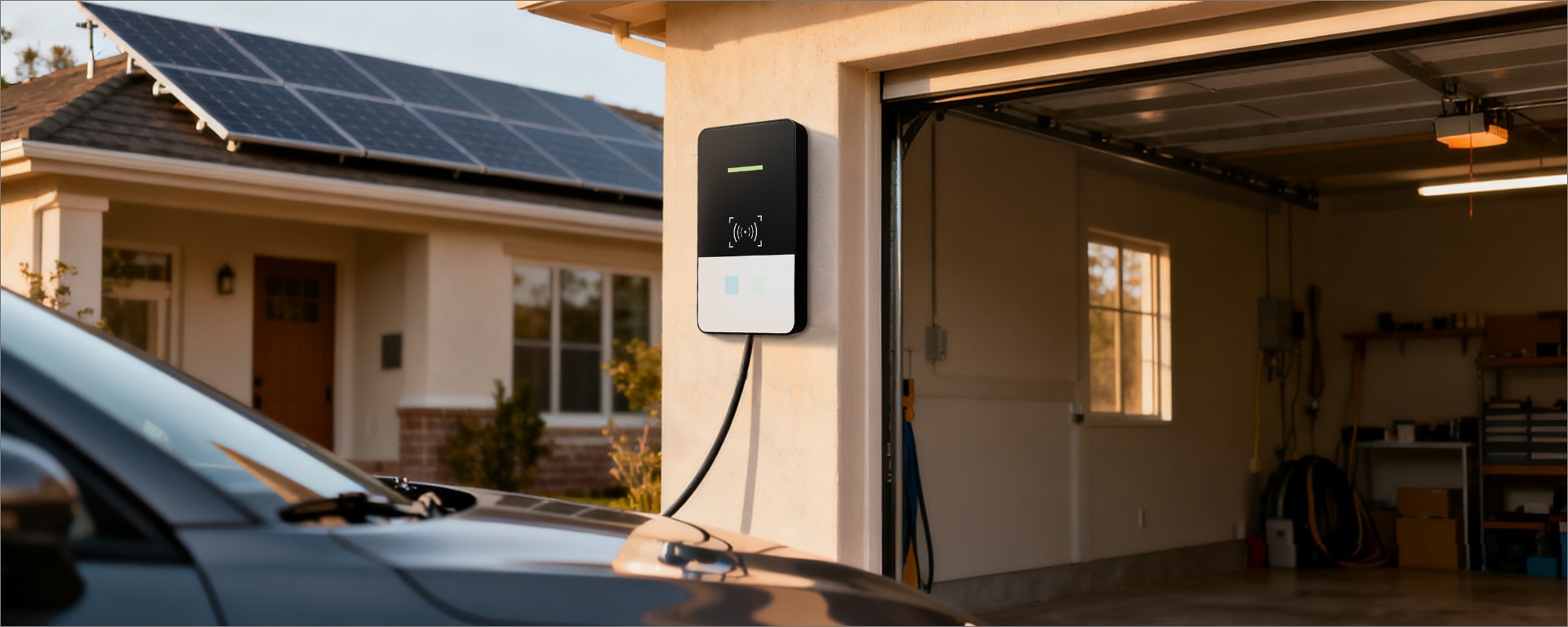
V2G readiness depends on three measurable areas: communication standards, grid regulations, and charger compatibility. By 2025, global EV sales reached more than 17 million units, creating a potential battery storage pool of hundreds of GWh. However, only vehicles, chargers, and grid systems that support bidirectional communication can participate in energy exchange.
Vehicle-to-Grid (V2G) allows electric vehicles to send electricity back to buildings or the power grid. Unlike traditional charging, which only transfers electricity from the grid to the battery, V2G requires two-way power flow, real-time communication, and certified hardware. A passenger EV with a 75 kWh battery can theoretically provide several hours of household backup power, depending on discharge limits and energy demand.
The development of V2G started with early demonstration projects in the 2010s, especially in Japan and Europe. By 2020, several pilot programs showed that EV batteries could support frequency regulation, peak demand reduction, and renewable energy balancing. A 2023 International Energy Agency report estimated that global EV stock exceeded 40 million units, creating increasing interest in using vehicles as distributed energy resources.
“A V2G system is not only a charger upgrade. It requires communication between the vehicle battery, charging equipment, energy management platform, and electricity provider.”
Communication standards determine whether different devices can exchange information correctly. ISO 15118 has become one of the most important protocols for advanced EV charging because it supports automatic identification, charging control, and bidirectional energy functions. The ISO 15118-20 standard released in 2022 added support for more advanced charging scenarios, including bidirectional power transfer.
Through ISO 15118 communication, an EV can provide information such as battery state of charge (SOC), available charging time, maximum charging power, and energy export capability. The charging system can then adjust electricity flow according to grid requirements and user settings.
Another widely used communication method is Open Charge Point Protocol (OCPP). OCPP connects charging stations with backend management systems operated by charging companies or energy providers. More than 70,000 organizations across over 100 countries use OCPP-based charging management systems, making it an important part of large-scale charging networks.
Different charging standards create compatibility differences between regions. CHAdeMO introduced bidirectional charging support earlier than many other systems and has been used in V2G projects since around 2012. The CCS charging standard, which has become common in Europe and North America, expanded bidirectional charging support through newer communication standards.
The technical connection between vehicle and charger is only one part of V2G readiness. The electricity grid must also define how EVs can export power, how safety is maintained, and how electricity services are managed.
Grid rules determine whether an EV can participate in energy programs. Traditional electricity systems were designed for one-way power delivery from large generators to consumers. V2G introduces thousands or millions of small energy sources connected through vehicles.
Several countries have developed regulations that allow EVs to participate in grid services. In the United Kingdom, projects such as frequency response programs have tested EV batteries as fast-response resources. Some studies showed that EVs can respond to grid signals within seconds, providing services that are difficult for slower power sources to deliver.
The United States has also expanded rules for distributed energy resources. The Federal Energy Regulatory Commission Order 2222 issued in 2020 encouraged electricity markets to include aggregated distributed resources, including batteries and potentially EV fleets.
Grid connection requirements usually include voltage control, frequency response, cybersecurity protection, and anti-islanding functions. When a power outage occurs, the charger must stop exporting electricity unless it is operating in an approved backup mode.
A V2G charger must also meet electrical safety standards. Bidirectional power conversion requires additional hardware compared with normal charging because electricity must move in both directions.
The charger market currently includes several technical approaches. DC bidirectional chargers are the most common solution for commercial V2G projects because they provide direct control over battery power flow. However, these systems are generally more expensive because they require additional power conversion equipment.
| Charger type | Typical power range | V2G suitability |
|---|---|---|
| AC Level 2 charger | 3–22 kW | Suitable for future residential V2G applications |
| DC fast charger | 50–350 kW | Suitable for fleet and commercial V2G |
| Bidirectional DC charger | 10–150 kW | Common option for current V2G projects |
Residential V2G systems are receiving more attention because home energy management is becoming more connected. Products such as the ESYsunhome EV22 charger are designed around bidirectional energy applications, allowing EV charging systems to interact with household energy systems.
Vehicle compatibility remains an important factor because not every EV battery system supports repeated charging and discharging. Battery management systems must monitor temperature, charging depth, and battery health. Research published in recent years suggests that controlled V2G operation can limit additional battery aging, while frequent uncontrolled discharge may increase degradation.
Battery capacity also affects practical performance. A 40 kWh battery may provide limited backup power, while vehicles equipped with 80–100 kWh batteries can support longer energy supply periods. In a 2022 study involving EV charging simulations, optimized V2G schedules reduced peak electricity demand by more than 20% in some residential scenarios.
User participation affects how widely V2G can be adopted. Vehicle owners need control over when their batteries provide electricity and how much energy remains available for driving. Many V2G programs therefore include minimum battery reserve settings, allowing users to keep a selected SOC level.
“Successful V2G programs combine automatic control with user-selected limits, so vehicles can support the grid without affecting daily transportation needs.”
Cybersecurity is also becoming more important as more vehicles connect to electricity networks. V2G communication involves exchanging vehicle data, charging information, and grid commands. Standards such as ISO 15118 include security features designed to protect communication between vehicles and chargers.
The future expansion of V2G depends on cooperation between automobile manufacturers, charger companies, utilities, and regulators. By 2030, several market forecasts expect millions of EVs to participate in managed charging and energy services as renewable energy capacity continues increasing.
Renewable energy growth is one reason V2G systems are receiving attention. Solar and wind power generation can change throughout the day, while EV batteries can store electricity when supply is high and provide electricity during periods of higher demand. In regions with high renewable penetration, flexible energy storage will become increasingly important.
A complete V2G system requires compatible vehicles, certified chargers, reliable communication protocols, and clear electricity market rules. As standards continue improving after 2025, more EV owners may use their vehicles not only for transportation but also as part of connected energy networks.
Ready to walk the Himalaya?
Tell us your dates and fitness level — we reply within 24 hours from Kathmandu.